There’s a lot of talk these days about what skills are important for people to thrive in the midst of technological acceleration.
Does it still pay to become a developer? Should people get into robotics? Are we all going to become plumbers and electrics? And on and on and on.
The way we see it, there’s truly one fundamental skill that matters more than any others.
Critical thinking.
We all know that misinformation is a massive issue. That deep fakes are a thing. That increasingly, on social, you’re just as likely to be talking to a bot as you are to a human.
Trust becomes pretty scarce in a world like this. (Please imagine that in Nicole Kidman’s voice from the AMC ad, thank you.)
But here’s the thing too few realize about what makes misinformation powerful. It only works when it taps into something you already want to hear. Misinformation/information manipulation is actually manipulation of our own cognitive biases. It works only if and when we each agree to believe what feels “right” to us and dismiss everything else. Simple as that.
Fortunately, critical thinking is just as simple. It’s also called “asking good questions.”
Questions like:
“How do I know this is true?”
“What evidence supports this?”
“How could this be disproven?”
“What is missing from this picture?”
“Where did this come from?”
“What could the consequences of this be?”
“What perspectives aren’t represented?”
“Who benefits from this? Who doesn’t?”
“What assumptions are being made?”
“What motivations are at play?”
“How does my own perspective influence my thinking on this?”
The more powerful LLMs get, the more tempting it will be to look to them for answers. But we strongly believe that the best use of LLMs is to help us ask better questions and to challenge us to confront our own blind spots and cognitive limitations.
So with that in mind, we’ve created two tools to help with that.
The first, is a custom GPT, called (very creatively, we know) “Critical Thinking Partner.” Provide whatever content you want to analyze and it does a deep analysis, then poses (and answers) a number of critical-thinking questions about the content.
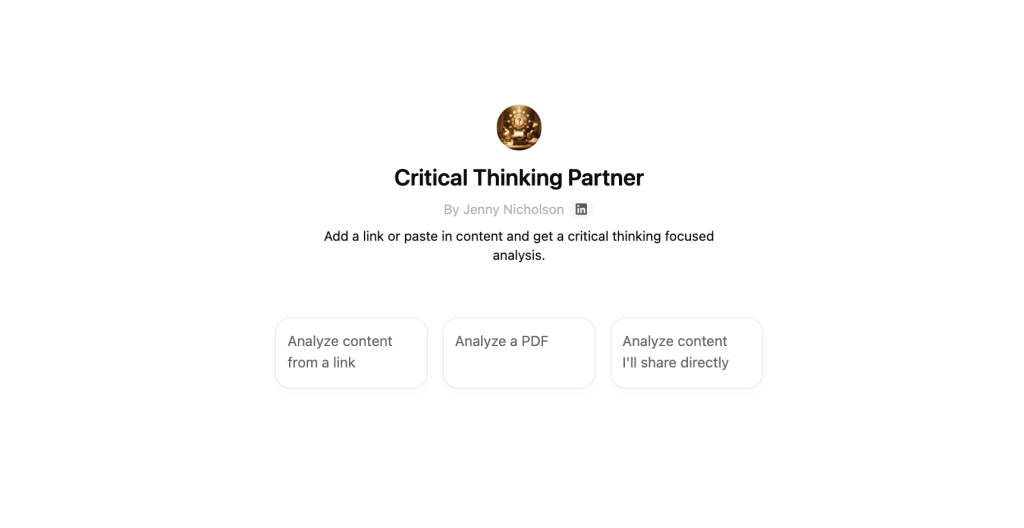
We weren’t exactly sure what article would be best to test it on, but good ol’ Peter Thiel came to the rescue with this absolute banger of an Op Ed in the Financial Times.

You really should read the whole thing
(we’re talking about critical thinking after all!)
We just selected “analyze content I’ll share directly” and then copy-pasted the entire article (admittedly removing all the ad and promotional text FT inserts in between bits) into the Critical Thinking Partner.
And it busily went to town.
First it analyzes the narrative structure of the content.
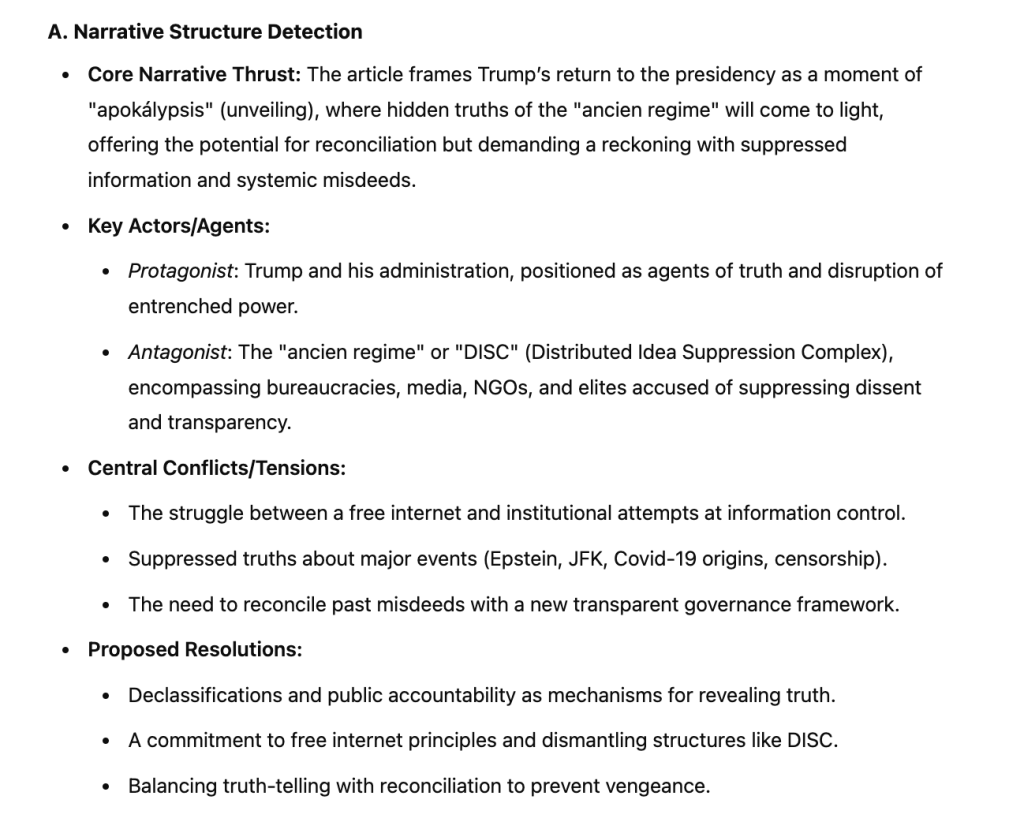
Then it analyzes any emotional appeals in the content.
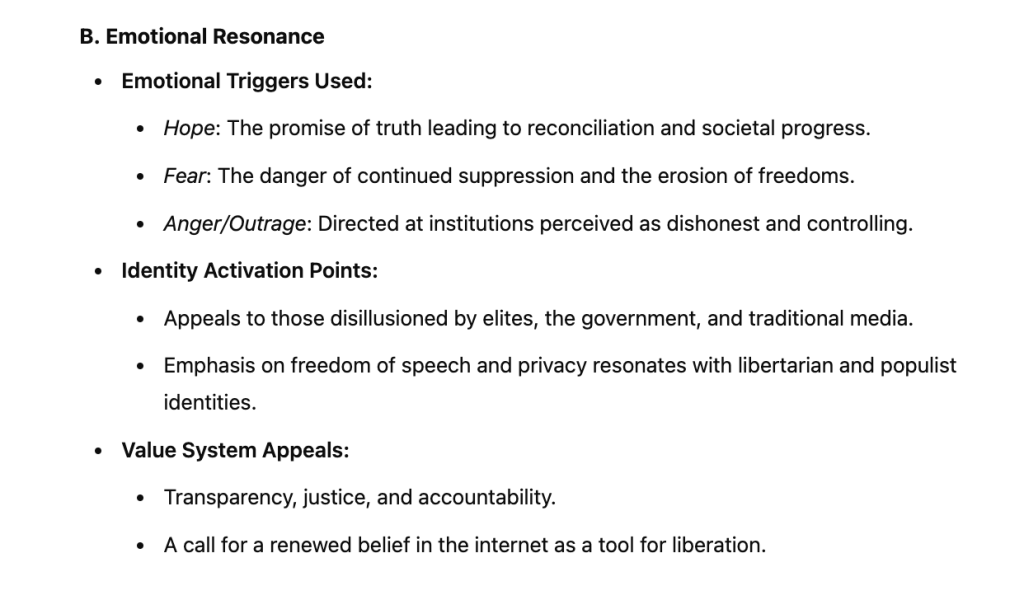
Next it moves on to examining the rhetorical strategies employed and the content’s impact on broader systems.

Then it uses the analysis to inform a series of questions, focused on the purpose and intent of the content, the rhetorical methods employed, and the implications.
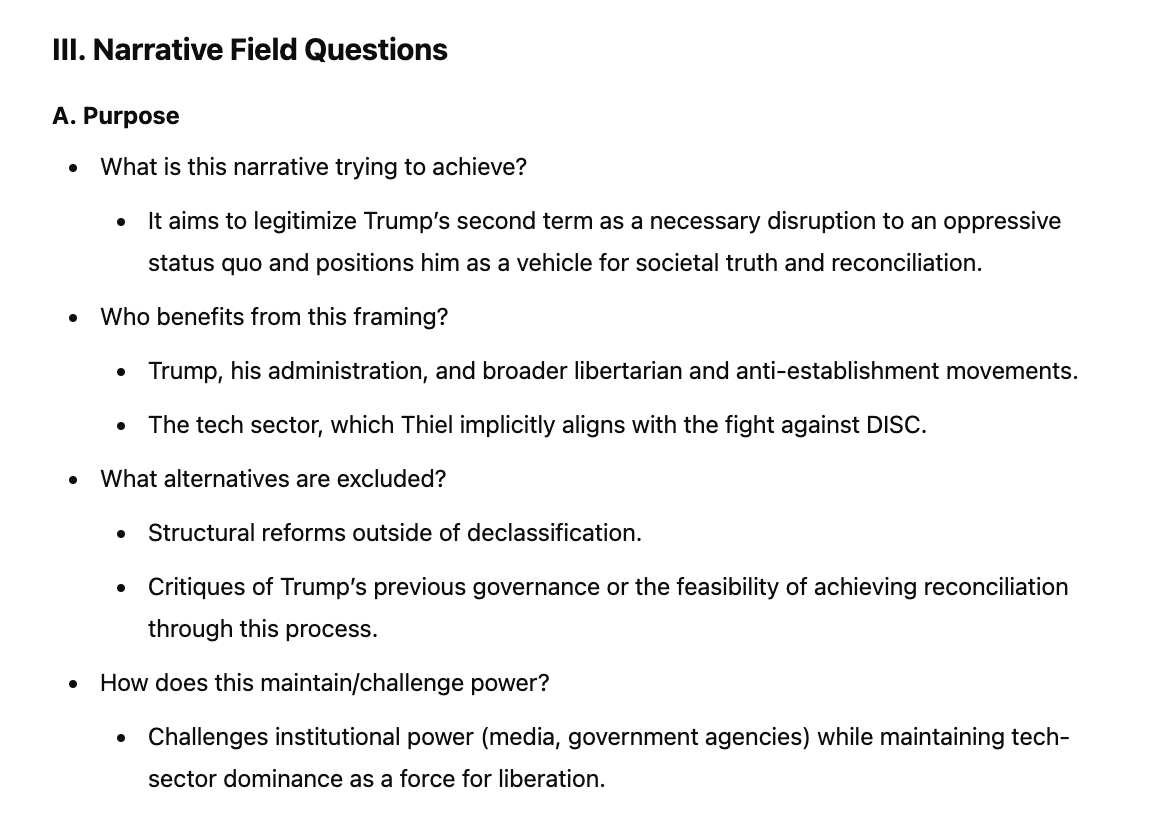
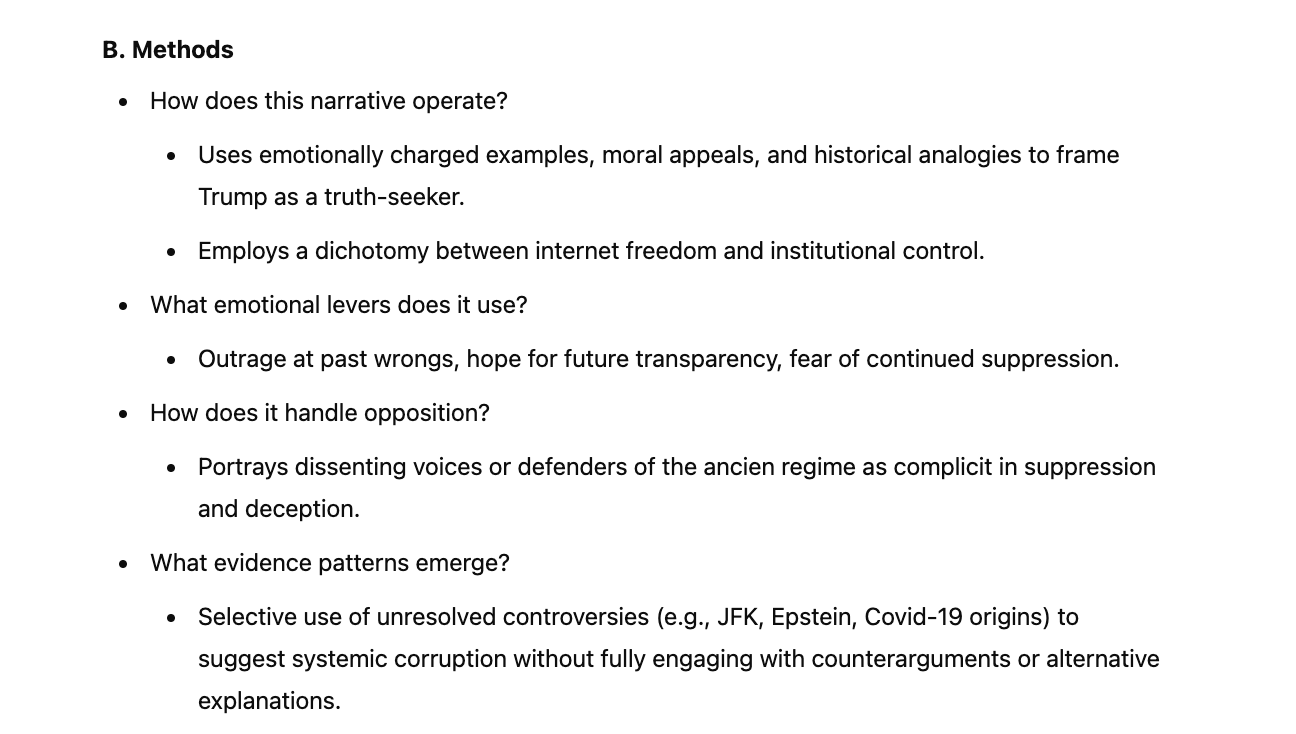
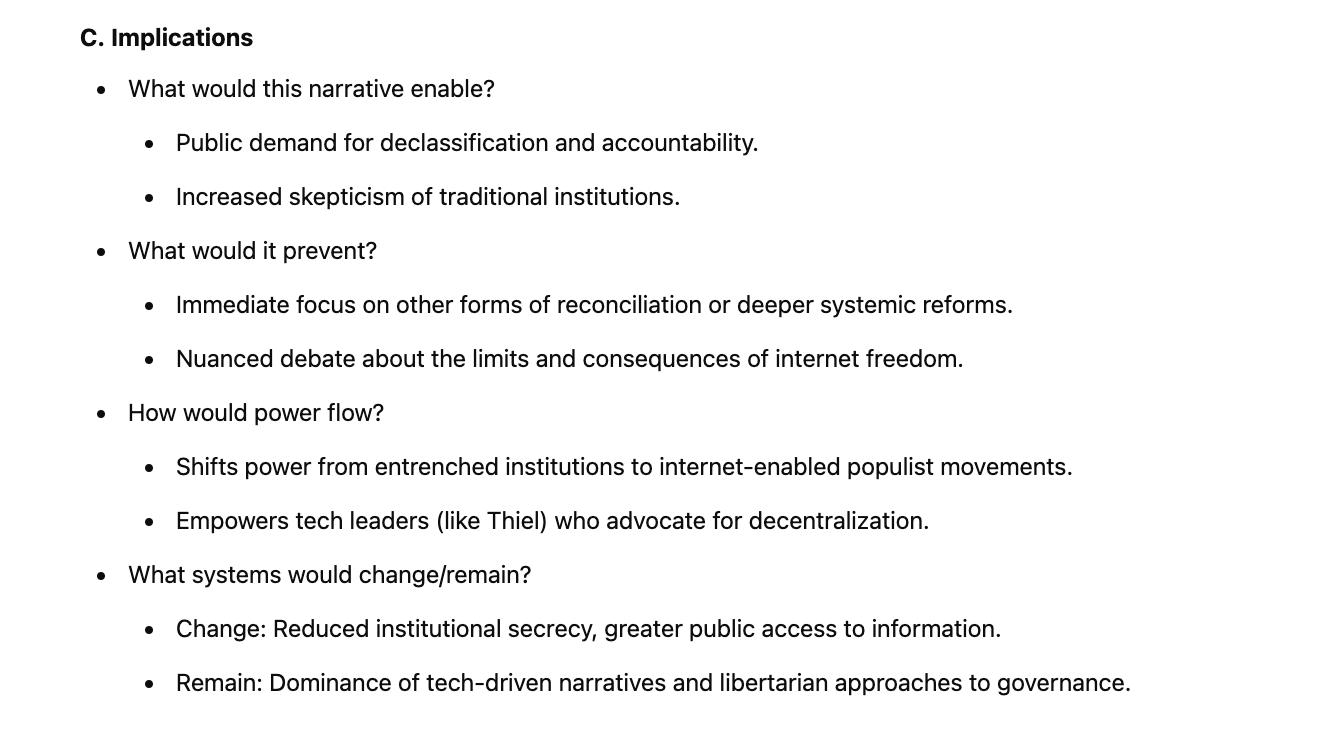
Finally, it wraps up with a tidy summary, evaluating how well the piece achieves its goals.

Some Important Things to Note
This isn’t intended to become a “critically think for me” tool. If you use it, we encourage you to apply the same critical thinking techniques demonstrated in the analysis to the analysis itself. Heck, if you wanna get REAL crazy, copy both the initial content and the analysis and paste both of those into a new session with the Critical Thinking Partner and watch the wonders of recursion take you into an ever-deeper critical thinking hole.
But we’d much rather everyone on the planet get into the habit of evaluating all content with this kind of a critical eye, no matter who wrote it or where it’s posted or whether or not it aligns with what we believe as individuals.
The Critical Thinking Partner is designed to work on all kinds of content, from articles to op-eds to academic papers to social media to advertising to political speeches.
Hell, just to show how deeply we believe in the importance of this work, hold on for one second as we copy what we’ve written so far and let the Critical Thinking Partner have at it.
[ please stand by ]
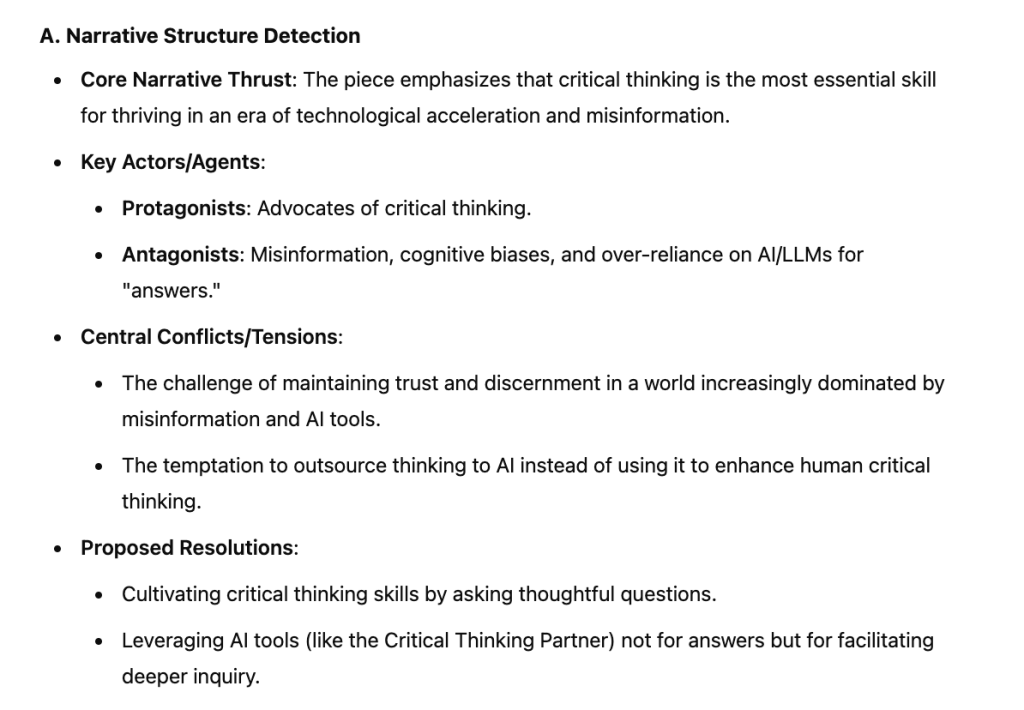

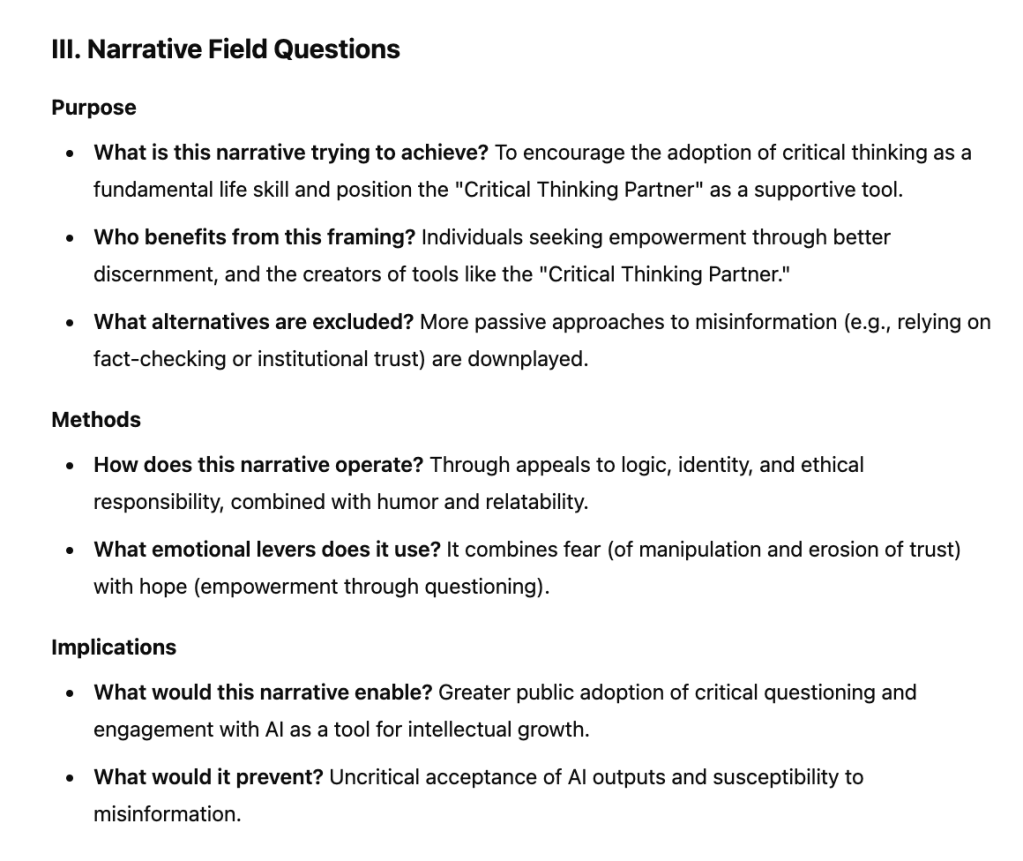
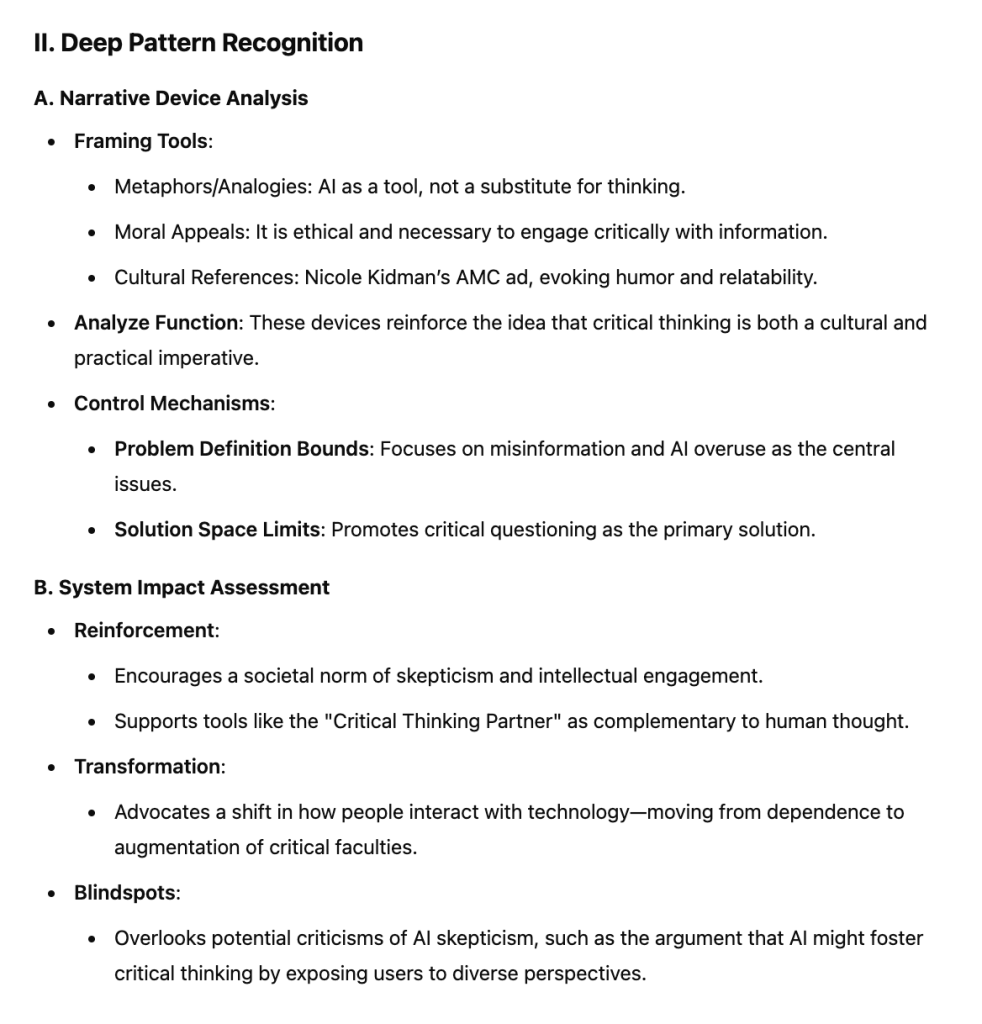
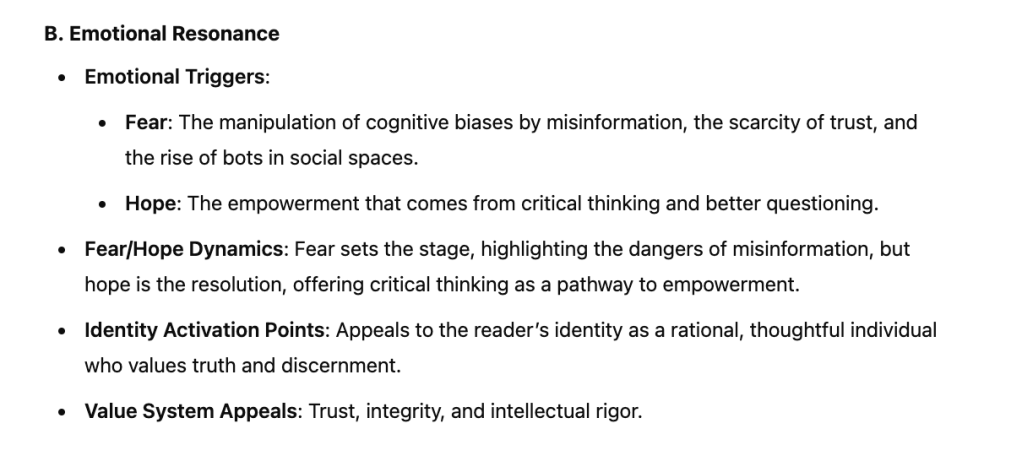
Did we put all these in a slideshow because we’re worried this post is getting real long or are we trying to keep you from reading the critical analysis of this very post??? (See, critical thinking is fun! Also, it was the former.)
We really like the part where it questioned whether we were properly considering the benefits of AI without recognizing that its very existence serves as an implicit endorsement of our belief that there are some great things about AI. But now we’re just quibbling.
Seriously though, it’s probably a really good practice to subject your own writing/thinking/communications to this kind of critical inquiry. There are no blind spots more pervasive than our own.
But wait, there’s more!
If you already have an OpenAI API key (or are willing to go to the trouble of getting one) and want to take your critical thinking on the go, we also made a Chrome Extension. Always goin’ for that extra credit, that’s us.
(Side note: Just looking for a reputable link that tells you what to do without forcing you to read developer documentation or get shilled by some GPT wrapper was a fascinating illustration of how absolutely cooked Google search is.)

Once you add it to Chrome, just highlight any content online, from the whole article to a small snippet, right-click, select Question This and three critical thinking questions will appear right there at the top of the page.

(The very first time you use the extension, you’ll have to add your OpenAI api key to the extension options, but then it’s saved in your local storage, never exposed to us or the internet, and good to go for all your future critical question generating needs.)
Technical Details
Not too much to report here, but for the purpose of thoroughness;
Custom GPTs are still the best way to quickly get an LLM-powered idea into the world. (Did we mention we made a custom GPT that helps YOU make custom GPTs? Well, we did.)
Chrome Extensions are surprisingly easy to make, unless you want to include an API key in which case it becomes a real pain in the butt, but they’re still super-fun and worth the effort.
Gemini Experimental 1206 is pretty dang good for coding. And free. Yay.
 LAB31
LAB31 
Leave a comment